Iran War – Kharg Island Threat, Strait of Hormuz, Second Night of Strikes
The US has spent a third of its Tomahawks and still won't fly over Iran; "total control" is a slogan stretched over a stalemate.
6 of 10 sides covered this
Not covered by Evangelical
Every outlet agrees the war escalated; they disagree on whether this is American strength, American overreach, or imperial crime.
How each side framed it — tap any headline for the read
Center
 “Trump threatens to take 'total control' of Iran's oil industry with major strikes”
PBS NewsHour
“Trump threatens to take 'total control' of Iran's oil industry with major strikes”
PBS NewsHour
“Assume total control”
"Assume total control" is reported as Trump's verbal escalation, and PBS carefully notes he "compared his plans for Iran to how the U.S. assumed control of Venezuela's oil sector after capturing then-president Nicolás Maduro" [153]. The piece tracks claims and counterclaims as procedure: Iran says the strait is closed, CENTCOM says it isn't, and PBS lets the dispute stand rather than resolving it.
Read the original ›
Soc Con
 “Is the Iran War Tipping the Gulf Away From the U.S.?”
The American Conservative
“Is the Iran War Tipping the Gulf Away From the U.S.?”
The American Conservative
“Behave just like everybody else, or we'll have to blow them up”
"Behave just like everybody else, or we'll have to blow them up" is the Trump threat to Oman that anchors the piece [224]. The American Conservative frames the war as strategic self-harm: Gulf bases have become "magnets for Iranian ballistic missiles," allies are treated as "instruments for projecting American interests," and the realist case is that the war is pushing the Gulf toward diversifying away from Washington [224].
Read the original ›
Lib
 “The Iran War Critic Under Investigation by the Trump Administration”
The Free Press
“The Iran War Critic Under Investigation by the Trump Administration”
The Free Press
“If we need to negotiate with bombs, we will negotiate with bombs”
"If we need to negotiate with bombs, we will negotiate with bombs" is Hegseth's line that opens the news roundup [265]. The Free Press is ambivalent on the war itself but foregrounds a civil-liberties alarm: the State Department is weighing whether to deport Trita Parsi, a green-card holder and the war's most-quoted critic [265]. It pairs the war with the 4.2% inflation print, attributing over 60% of May's increase to energy.
Read the original ›
Far Left
 “"I Really Don't Care, Do U?" Redux”
CounterPunch.org
“"I Really Don't Care, Do U?" Redux”
CounterPunch.org
“I really don't care. I couldn't care less”
"I really don't care. I couldn't care less" is the Trump quote CounterPunch builds an indictment around [5]. The war is one item in a catalog of what it calls criminal indifference, alongside Medicaid cuts and ICE deaths, and the framing is moral and absolute: Trump as an "adjudicated criminal" committing "possible war crimes in Venezuela and Iran." It assigns sole agency to Trump and treats the war as imperial aggression, not a two-sided conflict.
Read the original ›
Identity
 “What Iran and Israel's latest exchange of fire is really about”
Mondoweiss
“What Iran and Israel's latest exchange of fire is really about”
Mondoweiss
“An argument over the terms of the regional order”
"An argument over the terms of the regional order" reframes the strikes as strategy, not pyrotechnics [511]. Mondoweiss reads the exchange through the doctrine of "unity of fields," in which Gaza, Lebanon, and Iran are one interconnected front, and argues Israel's freedom of action now "requires American permission, and American permission is no longer unconditional." It centers the question the US outlets skip: whether Israel and the US can fight one front at a time.
Read the original ›
Dem Soc
 “BREAKING: Trump Says US WILL TAKE KHARG ISLAND”
Breaking Points
“BREAKING: Trump Says US WILL TAKE KHARG ISLAND”
Breaking Points
“They still do not want to risk sending planes over Iran”
"They still do not want to risk sending planes over Iran" is the military read that cuts against the dominance narrative [184]. Breaking Points walks through the hardware: 49 Tomahawks fired, roughly 30% of the US inventory gone, standoff munitions used precisely because manned flights keep getting shot down. The hosts treat Trump's "total control" talk as bluster contradicted by the Pentagon's own caution.
Unexpected alignment: the anti-interventionist right (The American Conservative), the socialist left (CounterPunch), and the heterodox Breaking Points all conclude the war is a strategic failure, reaching that verdict from incompatible premises (alliance management, anti-imperialism, and cold military accounting). Absent from all coverage: any concrete account of how a sustained Strait closure actually transmits to US consumer fuel prices, and who absorbs the first shock.
Read the original ›
The facts — what the record establishes
The US struck Iran for a second consecutive night into Thursday morning, with CENTCOM saying it targeted "Iranian military surveillance capabilities, communication systems and air defense sites" [153]. Trump posted that the US would hit Iran "VERY HARD TONIGHT" and would "assume total control" of Iran's oil and gas, including the Kharg Island terminal through which about 90% of Iranian exports pass [153][128]. Iran fired back at Kuwait, Bahrain and Jordan; Jordan said it intercepted 20 missiles, and Bahrain reported an 11-year-old girl injured [153]. Iran announced the Strait of Hormuz was closed; CENTCOM disputed the claim [153]. The US continued enforcing a port blockade, disabling tankers; an Indian official said a US strike killed three Indian sailors [153]. Breaking Points reported, citing a Fox correspondent's call from the Situation Room, that 49 Tomahawks were fired and that the US has expended roughly 30% of its Tomahawk inventory over the war [184]. The American Conservative reports Iranian missiles struck Kuwait International Airport's terminal, killing one and injuring 63 [224]. CounterPunch states 175 people were killed in a US strike on Iran's Shajareh Tayyebeh Elementary School [5]; this figure appears in no other outlet here and should be treated as a single-source claim.
The takeaway
The category split is stark: PBS treats this as institutional management (claims, counterclaims, procedure), The American Conservative as a strategic blunder, CounterPunch as imperial crime, Mondoweiss as a contest over regional order, and Breaking Points as a military stalemate disguised as victory. The convergence that matters is the cross-spectrum agreement that the war is failing on its own terms. The collective blind spot is economic mechanism: everyone reports the 4.2% inflation number and the Strait closure separately, and almost no one connects them into a causal chain for the reader. The closest historical rhyme is the tanker war of the late 1980s, when the US escorted shipping through the same waters; no outlet reaches for it.
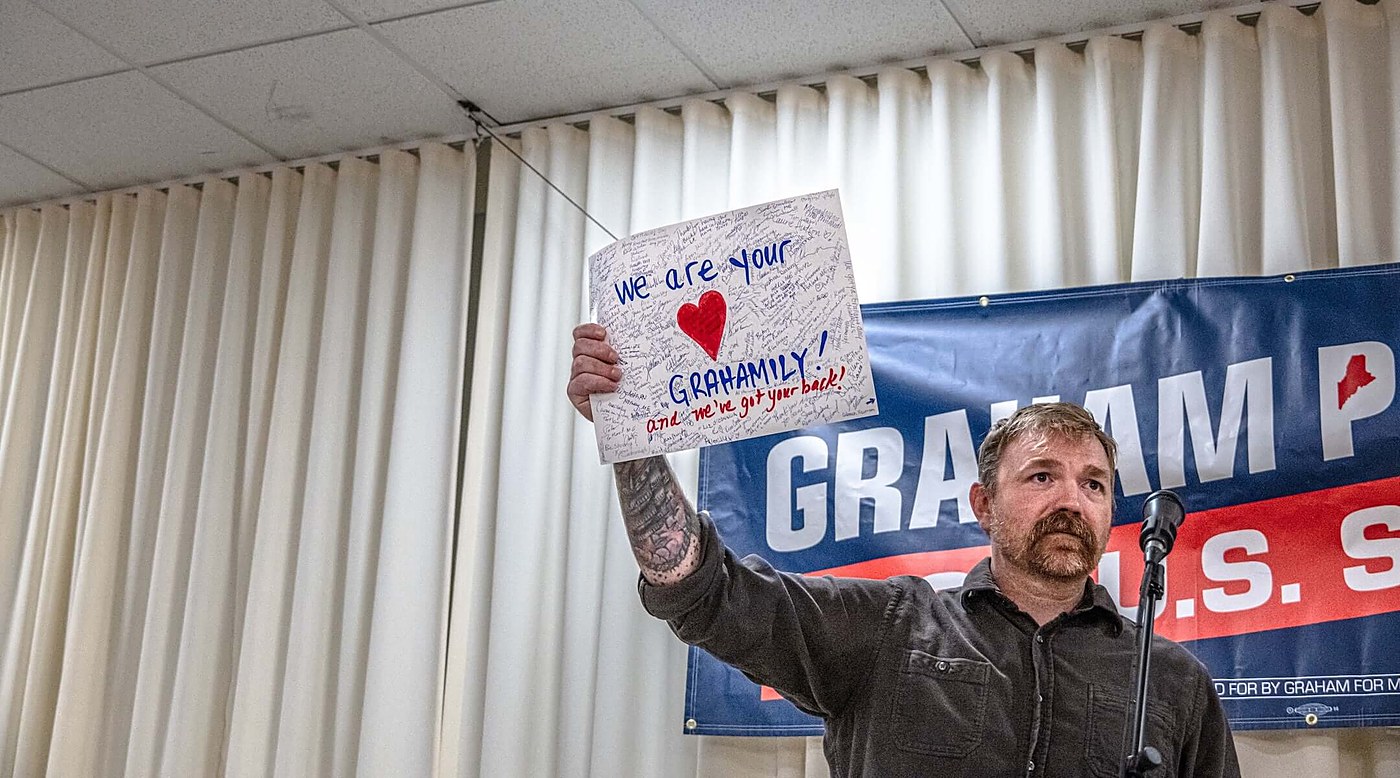
Graham Platner Wins Maine – Scandal, "Ratfucking," and the AIPAC Fight
A candidate who survived a Nazi-tattoo story and a sexting story may not survive his own party's money, or its fight over Israel.
5 of 10 sides covered this
Not covered by Communist, Evangelical
The same candidate is cast as a sabotage victim, a redemption story, a danger to women, and an antisemitism problem, depending on the outlet.
How each side framed it — tap any headline for the read
Center
 “The Democratic establishment begrudgingly moves to embrace Graham Platner”
Politico
“The Democratic establishment begrudgingly moves to embrace Graham Platner”
Politico
“Begrudgingly”
"Begrudgingly" carries the whole frame [178]. Politico reports the establishment's cold embrace as a process story: Schumer's tepid statement, Third Way's "must-win seat" anxiety, and the $70 million in GOP ad time already booked against $26 million for Democrats. No theory of whether Platner is good or bad, only whether he is viable.
Read the original ›
Center
“Some Maine Democrats are wavering on Graham Platner”
Politico
“I'm feeling very let down, disappointed”
"I'm feeling very let down, disappointed" is a skeptic-turned-fan-turned-skeptic voter, and the piece stacks up wavering Mainers [183]. Politico treats the scandal as an electability variable, interviewing nearly two dozen voters to measure whether the baggage sinks the seat, not whether the allegations are true.
Read the original ›
Dem Soc
 “Did the Democrats Sabotage Graham Platner?”
Truthdig
“Did the Democrats Sabotage Graham Platner?”
Truthdig
“Ratfucking”
"Ratfucking" is the organizing accusation [79]. Truthdig argues the most damaging hits came from inside his own party, sourced to internal oppo research and "laundered through credulous media intermediaries," and notes one accuser worked for Nikki Haley's campaign. The frame is that the centrist Democratic establishment would rather lose the Senate than lose control of the party.
Read the original ›
Lib
“Graham Platner's Ex-Girlfriend Wants to Set the Record Straight”
The Free Press
“Disgusting”
"Disgusting" is how the ex-girlfriend describes the backlash she faced for speaking [274]. The Free Press centers the women and the double standard, listing the Nazi tattoo, the Reddit posts calling himself a "communist," and the abuse allegations, and treats the episode as a test of whether the left will hold its own to account.
Read the original ›
Identity
 “Israel looms large as Maine heads to the polls”
The Forward
“Israel looms large as Maine heads to the polls”
The Forward
“Bought and paid for by Benjamin Netanyahu”
"Bought and paid for by Benjamin Netanyahu" is the Platner line the piece scrutinizes [547]. The Forward reports the genuine intra-community split: the ADL calls the remark a "dual loyalty trope," the more dovish Nexus Project also faults it as "reductive and wrong," and a viral supporter says an Israeli-flag tattoo would be worse than a Nazi one. It refuses to flatten Jewish opinion into one verdict.
Read the original ›
Liberal
“Trump's OWN WORDS come back to BITE HIM”
Brian Tyler Cohen
“He's a thug. I know thugs”
"He's a thug. I know thugs" is Trump attacking Platner, and Cohen turns it into a hypocrisy reel [144]. The opinion-leader frame is pure asymmetry: Trump, with his own record, calling someone else morally unfit, while Republicans run an indicted Texas Senate nominee. It is the mirror image of The Free Press, defending Platner by attacking the accuser-in-chief.
Unexpected alignment: Truthdig (left) and The Free Press (libertarian) both treat the scandal as engineered or weaponized, though one blames the Democratic establishment and the other defends the women who came forward. Absent from all coverage: any independent test of the "ratfucking" theory, which Truthdig asserts but cannot source beyond timing and inference.
Read the original ›
The facts — what the record establishes
Platner won the Maine Democratic Senate primary with close to three-quarters of the vote [178][183]. Gov. Janet Mills, the establishment's preferred recruit, had suspended her campaign in April after trailing him [178]. In the final week, the New York Times published accounts from ex-girlfriends alleging disturbing behavior, including one who said he twisted her arm and held a door shut so she could not leave [274][183]; this followed reporting on extramarital sexting [79]. Platner denied physical violence, admitted to being a "bad boyfriend," and said a tattoo resembling the Nazi Totenkopf was covered last fall and he had not known its meaning [178][547]. He raised $200,000 the day after the Times story [274]. He repeatedly attacked AIPAC, saying Collins is "bought and paid for by Benjamin Netanyahu" [547]. OpenSecrets confirmed that roughly a third of Collins's most recent quarter came via AIPAC-bundled donations [547].
The takeaway
Each camp decided this was a different kind of event: a viability problem (Politico), a party-establishment sabotage (Truthdig), a #MeToo accountability test (The Free Press), and an antisemitism reckoning (The Forward). The most revealing divergence is within the Jewish-American lens itself, where the disagreement is not about Platner's conduct but about whether naming AIPAC's money is analysis or a slur. The collective blind spot: almost no outlet weighs whether a candidate this damaged can actually beat Collins, as opposed to whether he should have won the primary.
The Epstein Files – A Situation Room Cover-Up and a Republican Purge
The desks counted the political bodies; the base's loudest voices counted the cover-up. Both were reading the same book.
3 of 10 sides covered this
Not covered by Social Conservative, Libertarian, Evangelical
The editorial outlets cover the electoral wreckage; the YouTube shows cover the alleged cover-up itself.
How each side framed it — tap any headline for the read
Liberal
 “Mace Defeat Heralds an Exodus of Rabble-Rousers From Congress”
New York Times
“Mace Defeat Heralds an Exodus of Rabble-Rousers From Congress”
New York Times
“Few tears were shed”
"Few tears were shed" sets a wry, institutionalist tone [119]. The Times frames the departures of Mace, Greene, Massie, and others as Congress losing its attention-seekers, treating the Epstein fight as one strand in a story about the decline of viral-clip politics rather than as a live scandal.
Read the original ›
Center
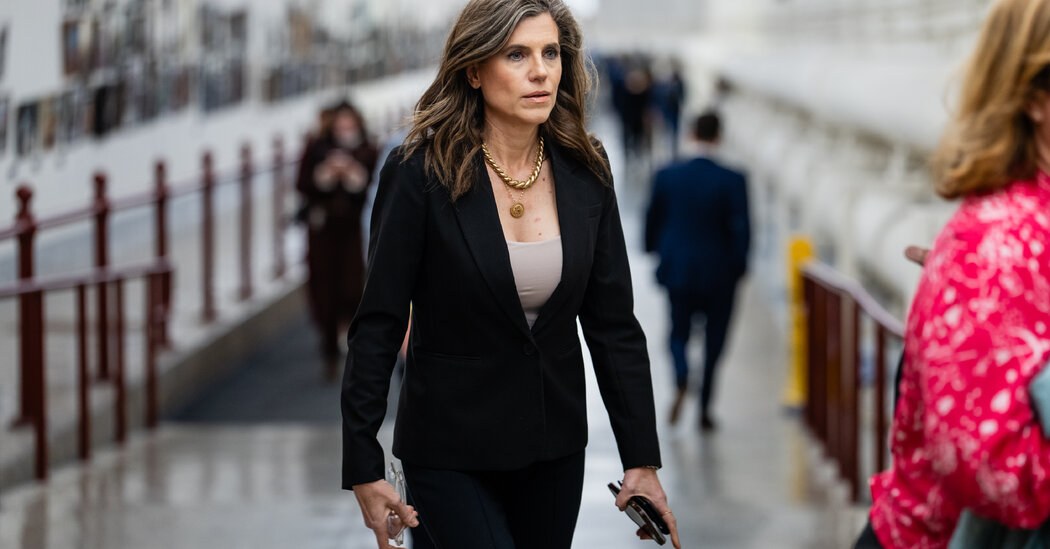
“Nancy Mace loses GOP primary for South Carolina governor”
Politico
“The latest victory for Trump”
"The latest victory for Trump" is the procedural read [180]. Politico ties Mace's loss directly to her Epstein-files vote and Trump's snub, slotting it into a tally of purged defectors (Massie, Cassidy) without dwelling on what the files contain.
Read the original ›
Dem Soc
“NYT Releases SHOCKING Epstein Files Report”
The Young Turks
“Someone within the Trump administration clearly leaked this”
"Someone within the Trump administration clearly leaked this" is the hook, and the show asks why [108]. The Young Turks read the cover-up as deliberate: the grand-jury gambit was designed to fail, and "the number one priority throughout" was protecting Trump, not transparency. The frame is institutional bad faith, narrated to an audience hungry for the mechanics.
Read the original ›
Liberal
“Trump FURIOUS After Explosive New Epstein Details LEAK”
Pod Save America
“It is deeply satisfying”
"It is deeply satisfying" that the aides most in touch with the MAGA base are the ones now burned by it [150]. Pod Save America leans into the lurid Situation Room detail and frames the episode as self-inflicted: a White House treating "your boss is a scumbag" like an international crisis.
Unexpected alignment: the NYT and Politico, writing days apart, both fold the Epstein scandal into a tidy "Trump consolidates the party" story, while the YouTube shows treat the same reporting as a live cover-up. Absent from the editorial coverage: the substance of what the database actually contained, which only the opinion-leader layer is willing to dwell on.
Read the original ›
The facts — what the record establishes
A forthcoming book by NYT reporters Maggie Haberman and Jonathan Swan, excerpted this week, reports that Trump's senior aides met repeatedly in the Situation Room to manage Epstein-files fallout [108][150]. According to the reporting, the Justice Department built and tested an internal searchable database but spiked it after a document about Trump kept surfacing first [150]; aides chose to petition courts to unseal grand-jury material precisely because they expected the courts to refuse, shifting blame to judges [108]. JD Vance reportedly argued for fuller transparency and was overruled [108][150]. Separately, Nancy Mace finished fifth in the South Carolina GOP gubernatorial primary [180]; Politico ties her collapse, and Thomas Massie's primary loss, to their having bucked Trump to force the Epstein files' release [180]. The NYT notes Marjorie Taylor Greene resigned in January after Trump branded her a "traitor" over the same fight [119].
The takeaway
This is the clearest desk-versus-base gap of the day. The editorial outlets categorized the story as electoral consolidation (who won, who lost, who got purged); the opinion-leader shows categorized it as a cover-up (what was hidden and why). The shared blind spot is that none establish the truth of the underlying allegations, only the politics of suppressing them. The pattern echoes the long arc of every Epstein revelation since 2019: maximum public appetite, minimal documentary resolution.
FISA Section 702 on the Brink – The Pulte Standoff
Democrats are letting the country's marquee spy power lapse to block a housing regulator they say uses databases to hunt Trump's enemies.
2 of 10 sides covered this
Not covered by Communist
Both outlets treat this as an institutional fight, but split on where the danger lies.
How each side framed it — tap any headline for the read
Liberal
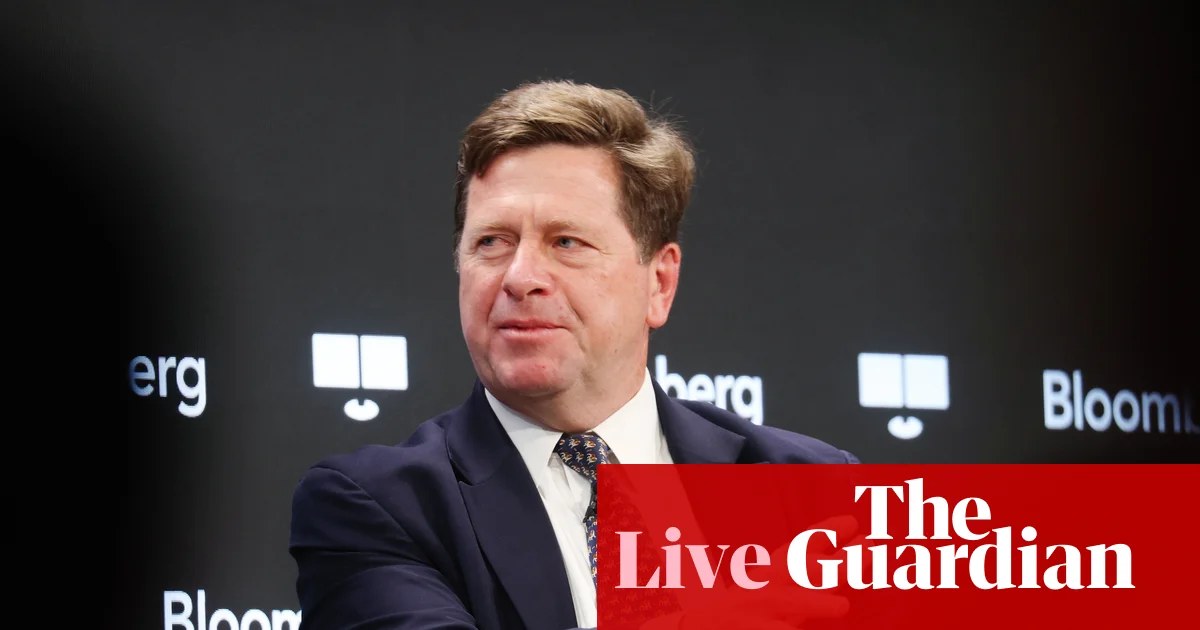
 “House blocks short-term extension of key Fisa spy power amid furor over Bill Pulte”
The Guardian
“House blocks short-term extension of key Fisa spy power amid furor over Bill Pulte”
The Guardian
“Shameful and very, very dangerous”
"Shameful and very, very dangerous" is Johnson's charge, which the Guardian quotes and then immediately undercuts [128]. The live blog foregrounds the Democratic civil-liberties rationale, that Pulte would weaponize surveillance databases against Trump's enemies, and notes the program likely will not actually "go dark." The frame is rule-of-law erosion.
Read the original ›
Center
“Trump sticks with Pulte for intel job as risk grows of lapse in spy powers”
PBS NewsHour
“A live hand grenade”
"A live hand grenade" is Sen. Warner's phrase for the Pulte appointment, and PBS uses it to organize a procedural account [160]. The piece reports the standoff as a negotiation, who is lobbying whom, what extension might pass, which candidates are floated, with the looming lapse as a clock rather than a constitutional stake.
Unexpected alignment: none beyond shared institutionalism. Absent from both: any libertarian or civil-liberties voice from outside the Democratic Party, even though Section 702's warrantless collection has long drawn bipartisan privacy objections; the surveillance-skeptic right and left are simply not in today's coverage of this story.
Read the original ›
The facts — what the record establishes
The House rejected a short-term extension of FISA Section 702 by 198-218, short of the two-thirds needed under fast-track rules, leaving the surveillance authority set to expire at midnight Friday [128][160]. Democrats refused to renew it over Trump's appointment of Bill Pulte, a housing-finance regulator with no intelligence experience, as acting Director of National Intelligence [128][160]. Several Republicans also balked [160]. Democrats said Pulte's "apparent motivation" was his "willingness to search government databases for alleged dirt on" Trump's political enemies [128]. The Guardian notes a year-long court certification may allow collection to continue even if the statute lapses [128]. Speaker Johnson called the Democratic move "shameful and very, very dangerous" [128].
The takeaway
Both outlets decided this is a process story, but the Guardian tilts it toward executive abuse and PBS toward institutional dysfunction. The notable absence is ideological: a surveillance fight that should light up libertarians (Reason) and the anti-state left went uncovered by both today, leaving only the two institutionalist lenses to narrate it. The closest precedent is the 2018 and 2024 reauthorization fights, when privacy hawks in both parties nearly sank 702; this time the hostage is a single personnel choice.
The AI Data Center Revolt – Same Fight, Opposite Politics
Socorro ranchers and NAACP organizers are fighting the identical buildout from opposite ends of the spectrum, and winning.
3 of 10 sides covered this
Not covered by Center
The same buildout reads as oligarchic land-grab, environmental-justice emergency, or market opportunity, depending on who is looking.
How each side framed it — tap any headline for the read
Far Left
“The Battle of Socorro, New Mexico and the Uprising Against AI Data Centers”
CounterPunch.org
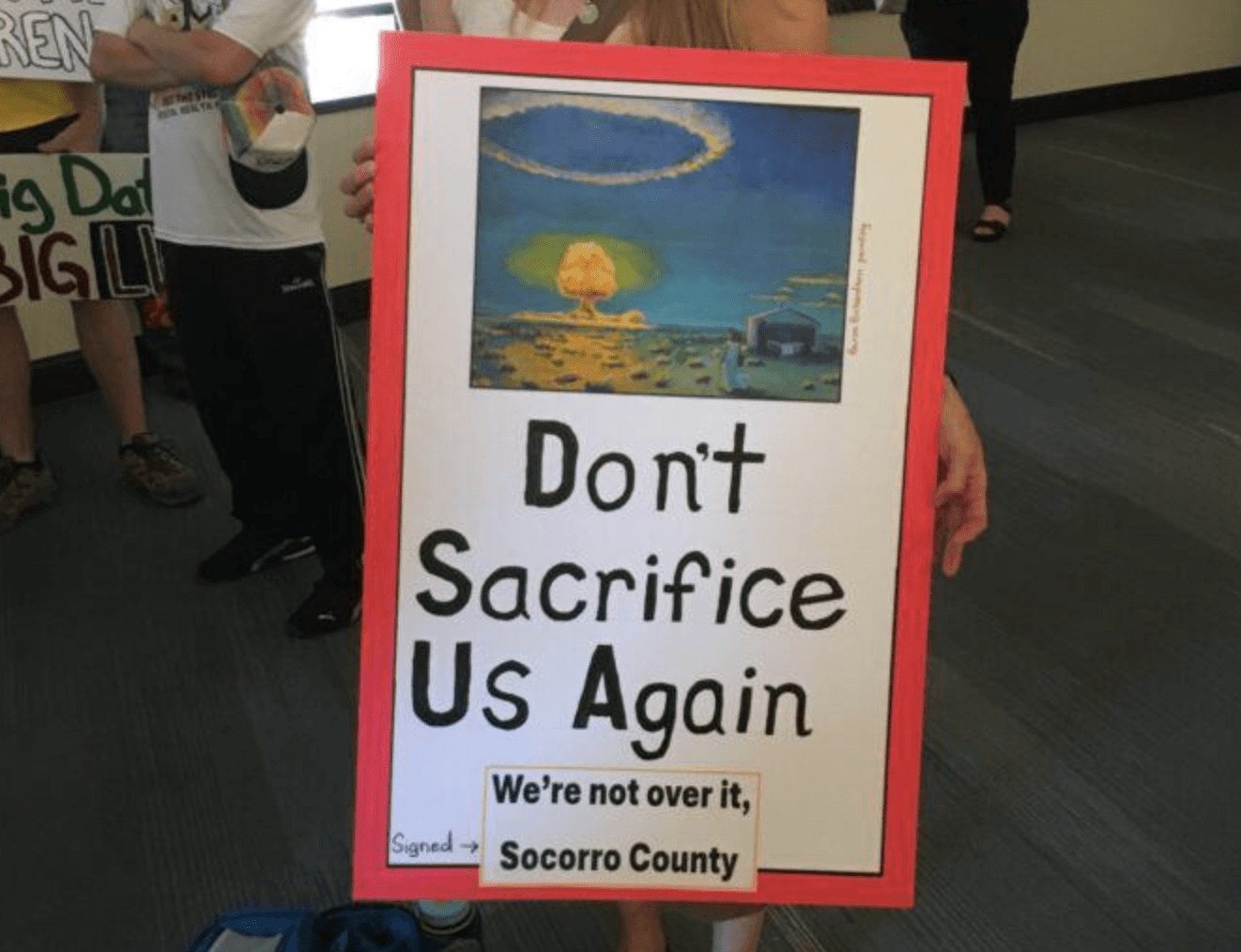
“Don't Sacrifice Us Again”
"Don't Sacrifice Us Again" is the protest poster, beside a painted mushroom cloud [12]. CounterPunch frames the fight as a multiracial, cross-class revolt, "rednecks and longhairs, techies and townies," against "creeping oligarchy," water theft, and the reopening of nuclear-colonial wounds. Agency sits with an organized community against a venture-capital intruder.
Read the original ›
Identity
 “Meet the women leading the people-powered push against data centers”
The 19th
“Meet the women leading the people-powered push against data centers”
The 19th
“People power is still on our side”
"People power is still on our side" closes the piece [520]. The 19th reads the movement through who is leading it and who is harmed: women fighting for "their children's health," Black communities siting these plants atop old industrial burdens, an NAACP environmental-justice framework. The lens is community impact and the gendered, racialized distribution of risk.
Read the original ›
Tech
 “Everyone wants a piece of Tesla's battery business”
TechCrunch
“Everyone wants a piece of Tesla's battery business”
TechCrunch
“There's a lot of potential for this market”
"There's a lot of potential for this market" is GM's battery chief, and the data-center boom is the demand driver [636]. TechCrunch frames the same triple-in-demand buildout the activists are fighting as a commercial race, sodium-ion versus lithium, supply-chain resilience, market share. The community opposition that dominates the other two pieces is invisible here.
Unexpected alignment: the far-left land-and-water frame (CounterPunch) and the identity/environmental-justice frame (The 19th) converge completely on the same enemy from different starting points, class struggle and community harm. The Tech/AI industry view shares their factual premise, an enormous power buildout, and reaches the opposite valence: opportunity, not threat.
Read the original ›
The facts — what the record establishes
A Canadian firm, Green Data, proposed a data center on 10,000-plus acres of New Mexico Tech land near Socorro; a May town hall drew roughly 200 residents in opposition, citing water scarcity, depleted-uranium dust, sacred land, and interference with the Very Large Array radio observatory [12]. The 19th reports nearly 1,500 data centers in development nationally, that $64 billion in projects have been terminated through community organizing, and that opposition is bipartisan but gendered, with women more resistant than men [520]. The NAACP sued Elon Musk's xAI over methane gas turbines powering a Memphis data center [520]. TechCrunch reports data-center energy demand is expected to nearly triple by decade's end, driving a boom in stationary batteries [636].
The takeaway
The left and the identity lens decided this is an environmental and democratic-sovereignty fight; the tech-industry lens decided it is a market. The genuinely surprising thing is the bipartisan base of the opposition, with Gallup showing roughly 7 in 10 Americans against local data centers [520], a rare issue uniting Socorro ranchers and Memphis NAACP chapters. The collective blind spot: none of today's coverage weighs the opposition against the case for the compute itself, treating the buildout as either a crime or a given.
AI's Reckoning Week – The Bubble, the Backlash, the Brain
The optimists went quiet; the day's loudest AI voices were all asking when, not whether, the money runs out.
Within Tech / AIthe internal split · 4 standpoints
These writers split on premises but land in the same skeptical place.
The standpoints — tap any headline for the read
hype-critical
 “AI Is Slowing Down”
Ed Zitron
“AI Is Slowing Down”
Ed Zitron
“A hysterical era perpetuated by liars, cowards, imbeciles, craven boosters and the easily-fooled”
"A hysterical era perpetuated by liars, cowards, imbeciles, craven boosters and the easily-fooled" is Zitron's register [589]. He frames AI as a financial impossibility: the revenue required to justify the compute commitments simply will not materialize, and the equity sales by hyperscalers signal that debt is drying up. The argument is accounting, not ethics.
Read the original ›
AI-safety/skeptic
 “Breaking news, and how the end might begin”
Marcus on AI
“Breaking news, and how the end might begin”
Marcus on AI
“It's gonna be [a] frickin' tidal wave”
"It's gonna be [a] frickin' tidal wave" is Eisman's line that Marcus adopts [613]. Marcus frames OpenAI as the subprime-style trigger: overcommitted, least-trusted, offering investors Madoff-adjacent guaranteed returns, and likely to be the first domino. His premise is institutional fragility and Sam Altman's credibility, not Zitron's pure math.
Read the original ›
harms/anti-hype
 “College Students Are Rapidly Losing the Ability to Read”
Futurism
“College Students Are Rapidly Losing the Ability to Read”
Futurism
“A measurable, generational collapse in sustained reading”
"A measurable, generational collapse in sustained reading" is the quoted instructor [601]. Futurism frames AI as cognitive harm, not financial bubble: students offloading thinking to chatbots, atrophying the neural pathways for sustained attention. The danger is to the human, not the balance sheet.
Read the original ›
abundance-optimist
 “Are you finally ready to admit it's the phones?”
Noahpinion
“Are you finally ready to admit it's the phones?”
Noahpinion
“We didn't evolve to live our lives as terminals of a digital hive-mind”
"We didn't evolve to live our lives as terminals of a digital hive-mind" is Noah's thesis [616]. A longtime techno-optimist frames the smartphone as the technology he always feared, a network-effect trap no individual can opt out of. It is the most striking defection: the abundance camp's own voice sounding the alarm.
Unexpected alignment: a financial doomer (Zitron), a safety skeptic (Marcus), an anti-hype harms reporter (Futurism), and an abundance optimist (Noahpinion) all arrive at caution from four different premises, accounting, fragility, cognition, and human autonomy. The shared blind spot is the counterfactual: none seriously engages the case that the compute buildout pays off, which is the bet SpaceX's $1.75 trillion valuation embodies.
Read the original ›
The facts — what the record establishes
Ed Zitron argues the AI buildout requires $2-3 trillion in annual revenue by 2030 to make sense, citing up to 190GW of planned data centers costing an estimated $9.5-15 trillion, and contends Anthropic and OpenAI represent 70-90% of all AI compute demand while losing billions [589]. Gary Marcus, recapping a Steve Eisman interview, argues OpenAI is the most exposed, "burning money the fastest," rushing an IPO ahead of Anthropic and making escalating concessions to investors [613]. Futurism cites the 2024 NAEP showing 12th-grade reading at its lowest since 1992 and an MIT study finding lower brain activity among ChatGPT users [601]. Noahpinion argues smartphones and social media function as a "collective trap" with network-effect lock-in [616]. Separately, the SpaceX IPO is set to list Friday at a reported $1.75 trillion valuation (CNBC).
The takeaway
Within the Tech/AI lens, the axis today is not optimist-versus-pessimist but premise-versus-premise, with every standpoint converging on skepticism: the bubble is financial (Zitron), institutional (Marcus), cognitive (Futurism), or civilizational (Noahpinion). The most telling signal is the silence of the builders; on a day with a record-setting IPO, the loudest AI voices were all bracing for a fall. The historical analogy the writers themselves reach for is 2008 subprime, with OpenAI cast as the paper nobody will keep buying.
The Karmelo Anthony Verdict – One Killing, Two Theories of Justice
A guilty verdict became a referendum on whether American justice should be colorblind or context-aware, with Christians on both sides citing scripture.
3 of 10 sides covered this
Not covered by Communist
The same verdict is a story about anti-white double standards, about colorblind biblical justice, or about Black safety in white spaces.
How each side framed it — tap any headline for the read
MAGA
 “Color Coding Murder Is Killing Society”
The Daily Wire
“Color Coding Murder Is Killing Society”
The Daily Wire
“Suicidal empathy”
"Suicidal empathy" is the framing device, aimed at Jasmine Crockett and the left [360]. The Daily Wire casts the verdict as a rare moment of justice against a tide of race-based leniency, stringing together Iryna Zarutska and other cases into a civilizational-decline narrative, and assigns blame to "the Marxists [who] swapped class warfare for identity warfare." Agency lies with a dangerous ideology, not individuals.
Read the original ›
Evang
 “Karmelo Anthony murder verdict: Why we must reject racial proxies”
The Christian Post
“Karmelo Anthony murder verdict: Why we must reject racial proxies”
The Christian Post
“Reject racial proxies”
"Reject racial proxies" is the explicit thesis [417]. The Christian Post frames the verdict as biblical justice working as designed, citing Leviticus and Deuteronomy on impartiality, and rebukes both the left's grievance scripts and any demand for racial jury quotas. It mourns both families as "image-bearers of God" and refuses the oppressor-oppressed frame.
Read the original ›
Identity
 “After the Karmelo Anthony verdict, some Black families are reconsidering life in predominantly white communities”
TheGrio
“After the Karmelo Anthony verdict, some Black families are reconsidering life in predominantly white communities”
TheGrio
“Please free yourself from white proximity”
"Please free yourself from white proximity" is a viral post the piece elevates [558]. TheGrio reads the verdict through Black safety and belonging, interviewing family therapists on "racial isolation" and the value of raising children in supportive Black community. It does not relitigate the verdict; it asks what the case means for where Black families choose to live.
Unexpected alignment: the Evangelical Christian Post and the MAGA Daily Wire both reject the identity-politics reading of the verdict, but the Christian Post does so by appealing to impartial scripture and explicitly mourning both young men, while the Daily Wire does so by indicting an ideological enemy. They share a conclusion and almost nothing else in tone. Absent from all: the actual trial evidence beyond a few details, and any mainstream or centrist account at all, this is a story only the ideological and identity lenses touched.
The facts — what the record establishes
A Collin County, Texas jury convicted Karmelo Anthony, 19, of murder for fatally stabbing 17-year-old Austin Metcalf at an April 2025 track meet, deliberating about three hours; he was sentenced to 35 years [360][417]. Anthony was 17 at the time and tried as an adult; the knife pierced Metcalf's heart [417]. The defense claimed self-defense; no Black jurors were seated, which the defense challenged and the judge upheld [417]. Rep. Jasmine Crockett publicly questioned the verdict and the characterization of the knife [360]. Frisco is roughly 45% white, 33% Asian, 10% Hispanic, 10% Black [558].
The takeaway
The category split is a fight over what justice is for: the Daily Wire treats the verdict as a cultural battle against leniency, the Christian Post as a vindication of colorblind biblical law, and TheGrio as evidence that even a "correct" verdict cannot make white spaces safe for Black children. The notable convergence is two Christian-right-adjacent outlets, one Protestant-populist and one carefully theological, reaching the same anti-CRT conclusion by opposite routes. The blind spot is shared and striking: a case this nationally charged drew no coverage from the mainstream, center, or left lenses today, leaving only the warring edges to define it.
Defense manufacturers. RTX (Raytheon) builds the Tomahawks the US is burning through in Iran, roughly 30% of inventory by Breaking Points' count
[184], and just signed Pentagon framework deals to ramp toward 1,000 missiles a year while the 2026 budget funds only 57 (
Calibre Defence). A protracted war converts a stockpile drawdown into a multi-year procurement pipeline.
AIPAC and Maine. Pro-Israel bundling supplied nearly 20% of Susan Collins's most recent quarter (~$538,000 from 315 donors) (
Zeteo), and GOP-aligned groups have reserved roughly $70 million in Maine ad time to Democrats' $26 million
[178]. The financial asymmetry, not the scandals, may be the decisive variable in the seat.
SpaceX insiders. Friday's IPO at a reported $1.75 trillion would mint a trillionaire and thousands of millionaires on a valuation analysts call speculative, with the AI/space unit losing $2.5 billion a quarter; Warren flagged that "senior Trump Administration officials" are among the beneficiaries (
CNBC).
AI capital. OpenAI and Anthropic have made well over a trillion dollars in compute commitments and represent the large majority of AI demand, leaving the entire buildout dependent on continued debt and equity issuance
[589][613]. Meanwhile $64 billion in data centers has been blocked or delayed by local organizing (
Data Center Watch).
State capacity as a balance sheet. USAID and USDA cuts wobbled the decades-old screwworm containment program in Panama, and the pest is back in Texas cattle, a slow-motion cost that Slow Boring and The Majority Report both trace to the same erosion
[584][106].