US-Iran Memorandum of Understanding
A deal was announced at least four times before this one; the fourth still has no published text, no resolved nuclear terms, and no answer on what Iran's proxies or missiles will do next.
9 of 10 sides covered this
Not covered by Communist
The MOU was the single biggest story across the ideological spectrum on June 16, but each camp decided a different thing had happened: military victory, humiliating surrender, strategic wisdom, naive incompetence, economic relief, or threat to Israel. The core split is between those who evaluate the deal by what it achieves and those who evaluate it by what the administration said it would achieve.
How each side framed it — tap any headline for the read
Dem Soc
 “Trump Says Israel Is Killing Too Many Civilians In Lebanon”
The Majority Report w/ Sam Seder
“Trump Says Israel Is Killing Too Many Civilians In Lebanon”
The Majority Report w/ Sam Seder
“None of it's being released.”
[59]
"None of it's being released." Sam Seder frames the agreement as a product of US failure to achieve its stated war aims, delivered in conditions of deliberate opacity: JD Vance "is being sent around to right-wing outlets to explain that it's a great deal, of course, so great we don't want to show it to you." The Majority Report positions US involvement in the Iran war as "our assault on Iran" whose ending is welcome for the right reasons (ending a folly) even if the diplomatic outcome is thin. The show criticizes the secrecy as much as the substance.
Read the original ›
Liberal
“Trump Takes Major Loss with Embarrassing Iran War DEFEAT”
Pod Save America
“A memo to end hostilities, allegedly.”
[144]
"A memo to end hostilities, allegedly." Pod Save America reads the MOU as a comprehensive political loss: the administration launched a war with stated goals of denuclearization, ending Iranian proxy networks, and dismantling the missile program, achieved none of them, and is now selling a memo of intent as a victory. The podcast notes markets reacted positively to the ceasefire while the underlying strategic picture is unchanged. Senator Mark Warner appeared on the show pressing for congressional review.
Read the original ›
Liberal
“UH-OH: Vance admits TRUMP'S DONE”
David Pakman Show
“This is really a surrender, not a victory.”
[141]
"This is really a surrender, not a victory." Pakman focuses on a specific Vance admission in a Fox/Hannity interview: the vice president conceded that nuclear inspection terms are not settled. Pakman's framing is that the deal's incompleteness, disclosed by its own negotiator on a friendly channel, is the definitive tell. He describes JD Vance's attempt to explain the deal as itself the evidence of failure.
Read the original ›
Soc Con
 “The U.S.–Iran Deal Could Help Transform America's Mideast Strategy”
The American Conservative
“The U.S.–Iran Deal Could Help Transform America's Mideast Strategy”
The American Conservative
“Washington doesn't need to be the region's micromanager.”
[233]
"Washington doesn't need to be the region's micromanager." The American Conservative frames the MOU as a realistic, even welcome pivot away from US overextension in the Middle East. The piece notes Pakistan's role as a non-aligned broker as a genuine strategic opening, praises the Vance-Ghalibaf negotiation as historic (first direct talks since 1979), and argues the 60-day framework for nuclear discussions is workable. The article emphasizes what the deal does achieve (ceasefire, Strait reopening, sanctions framework) rather than what it defers.
Read the original ›
Lib
“Dave Smith | We Have A Deal | Part Of The Problem 1407”
Dave Smith
“We have a deal. Well, we have a memo. Okay. We don't have the memo, but we've been told there is a memo.”
[283]
"We have a deal. Well, we have a memo. Okay. We don't have the memo, but we've been told there is a memo." Dave Smith (91,544 views) conveys cautious relief while refusing to match the triumphalism he observes on the right. He notes this announcement follows previous failed deal announcements, and takes the skepticism seriously without dismissing the possibility that this one is real. The libertarian framing is that any end to the war is good on its face, regardless of which side benefits diplomatically.
Read the original ›
Center
“PBS News Hour full episode, June 16, 2026”
PBS NewsHour
“Will Israel stop strikes in Lebanon and who controls the Strait of Hormuz?”
[223]
"Will Israel stop strikes in Lebanon and who controls the Strait of Hormuz?" PBS NewsHour frames the deal through unresolved operational questions rather than ideological stakes: Israel's compliance is uncertain, the Strait is not yet open, and the "still murky agreement" between the US and Iran has not been publicly disclosed. The broadcast leads with these unanswered questions and reports them as institutional uncertainties, not political failures.
Read the original ›
MAGA
“TRUMP HAS WON, THE WAR IS ENDING”
Tim Pool
“Ladies and gentlemen, this time it's officially done. The war is over.”
[391]
"Ladies and gentlemen, this time it's officially done. The war is over." Tim Pool (62,083 views) leads with celebratory framing: oil is down, stocks are up, the Strait reopens Friday. But he explicitly hedges: "I'm not entirely convinced. And I hate covering the story, to be completely honest, because Trump's been yo-yoing. We've had four major announcements of a peace deal that haven't come through." The MAGA base receives a victory headline with a small-print disclaimer that Pool himself doesn't fully believe.
Read the original ›
Evang
 “Oil Price Drops, Stocks Soar After Iran Agreement; Skepticism High for Israelis, Dissidents”
CBN News feeds
“Oil Price Drops, Stocks Soar After Iran Agreement; Skepticism High for Israelis, Dissidents”
CBN News feeds
“Skepticism high for Israelis, dissidents.”
[397]
"Skepticism high for Israelis, dissidents." CBN reports the economic upside accurately (oil near $80/barrel, Dow at new high) while centering the Israeli perspective as the story's primary concern. The piece notes that major Israeli war aims, including eliminating Hezbollah's threat and ensuring Iran cannot rebuild its military capacity, are not addressed in the MOU. Trump's comparison to the Obama 2015 deal is quoted, but the Israeli government's ambivalence frames the Evangelical reading.
Read the original ›
Evang
“Oil Price Drops, Stocks Soar After Iran Agreement; Skepticism High for Israelis, Dissidents”
CBN News
[420]
CBN News's YouTube channel runs the same story as its news feed, reaching the Evangelical base with the identical dual frame: economic relief paired with Israeli skepticism. La Opinión runs the same Reuters wire in Spanish.
Read the original ›
Identity
 “Trump Says Iran Deal to Be Public Soon and Will Rule Out Nuclear Weapon for Tehran”
Algemeiner.com
“Trump Says Iran Deal to Be Public Soon and Will Rule Out Nuclear Weapon for Tehran”
Algemeiner.com
“Trump says Iran deal be public soon and will rule out nuclear weapon for Tehran.”
[460]
"Trump says Iran deal be public soon and will rule out nuclear weapon for Tehran." The Algemeiner, reading for the Jewish American community, centers the nuclear dimension above all else: Trump's public statement that the text explicitly prohibits Iran from having a nuclear weapon is the critical fact. The piece also notes that Iran's proxy support and missile program are not on the next agenda, which registers as an unresolved concern, and that Iranian dissidents are skeptical.
Read the original ›
Identity
“SPECIAL: US-Iran peace deal explained with expert analysis | MEE Live”
Middle East Eye
[529]
"It's not a deal. It's a memorandum of understanding, a vague agreement to extend the April ceasefire and negotiate the finer points thereafter. Beyond that, the contents are unclear, the details yet to be published." MEE's live expert analysis (2,192 views) opens with the sharpest definitional challenge to the deal's framing. MEE notes that "competing narratives have emerged" in the vacuum of solid information, specifically naming hardline elements in Iranian state media overselling the deal domestically while Israeli media picks up and amplifies those oversells. The Palestinian-Arab lens sees the opacity as itself a political act.
Read the original ›
Tech
 “Iran is Trump's Katrina”
Noahpinion
“Iran is Trump's Katrina”
Noahpinion
[542]
"Iran is Trump's Katrina." Noah Smith puts the Iran war alongside Bush's Hurricane Katrina response: for both, "even many of Trump's defenders will be forced to admit, in private if not in public, that the man and his administration are grossly, pathetically incompetent." Smith notes Trump's pre-existing low approval ratings mean this may not be the turning point it was for Bush. The analogy frames the MOU as a competence verdict, full stop.
Unexpected convergence: the libertarian Dave Smith and the democratic socialist Sam Seder both centered the deal's opacity as the lead problem, reached similar conclusions about secrecy from opposite premises (antiwar principle vs. pro-transparency vs. anti-establishment skepticism). Tim Pool (MAGA) and Middle East Eye (Palestinian-Arab) both expressed skepticism about whether the deal would hold, for different reasons.
Absent from all coverage: the Gulf states' reported role in funding any post-war reconstruction, and what happens to the approximately $300 billion in Iranian assets that were discussed for unfreezing if the 60-day negotiation collapses.
Read the original ›
The facts — what the record establishes
Pakistan's Prime Minister Shehbaz Sharif confirmed the deal's existence; Pakistan served as the intermediary and Islamabad hosted the first US-Iran talks at this level since 1979. [233] JD Vance is expected to sign alongside Iran's Parliamentary Speaker Mohammad Bagher Ghalibaf at a ceremony in Geneva on June 19. [233] The memorandum of understanding extends the April ceasefire for 60 days and is intended to reopen the Strait of Hormuz. [233][460] It would also include sanctions relief and unfreezing of Iranian assets, though implementation modalities are unresolved. [233] Oil fell to approximately $80 per barrel after the announcement, and the Dow Jones hit a new high. [397] Trump said at the G7 in France that the deal is "better than Obama's 2015 agreement" and that it rules out Iran having a nuclear weapon. [397][460] DISPUTED: Trump and Vance both said on Monday that a deal had "already been signed," while the formal signing was simultaneously described as scheduled for Friday; the text has not been released as of the evening of June 16. [233][460][529] Iran's proxy support for regional armed groups and its missile program "are not thought to be on the agenda" for the next phase of negotiations. [460]
The takeaway
Every ideological camp decided on a different event. For MAGA it was a military victory (the war is over, oil is down). For liberal mainstream media it was a capitulation: the administration announced war goals it did not achieve and is calling the failure a deal. For social conservatives it was strategic realism: the US stopped trying to micromanage the Middle East and got a workable framework. For the libertarian and democratic socialist left, it was a non-deal and the missing text was the first complaint. For the Evangelical right it was an economic relief event shadowed by Israeli insecurity. For Jewish American media the nuclear guarantee is the central fact; for Palestinian-Arab media the vagueness is. For center-left essayists (Noahpinion) it was a competence test the administration failed. The collective blind spot across every framing is the 60-day negotiation itself: almost no coverage examines what specific concessions Iran retained or what the US can realistically extract in a second round with the military leverage already withdrawn.
---
2026 Midterm Primaries, Georgia, Alabama, Oklahoma
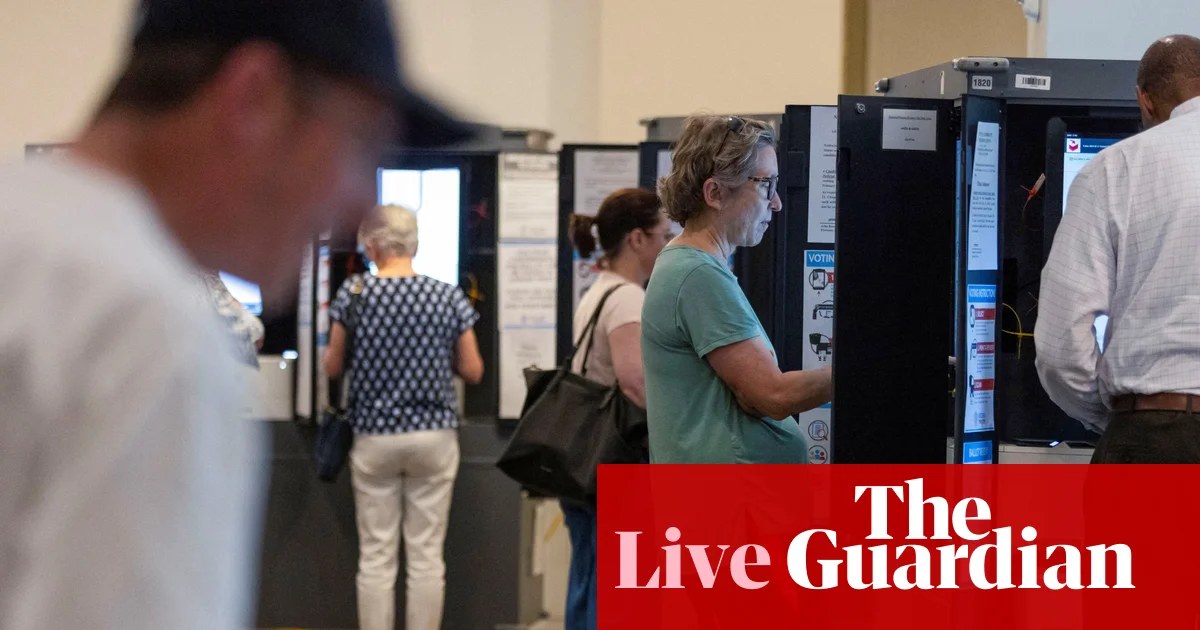
Trump's last-minute endorsement of Collins made the Georgia Senate race a proxy war between his brand and Brian Kemp's, and both men are now claiming credit for the same outcome.
3 of 10 sides covered this
Not covered by Communist, Democratic Socialist, Social Conservative, Libertarian, Evangelical, Identity, Tech
The primary results were read through two distinct frames: whether Trump's endorsement power held, and what the outcomes mean for November battleground races. The third question, what role Kemp's rival machine played, received serious treatment only in the center press.
How each side framed it — tap any headline for the read
Liberal
 “Trump tests and looming battleground races highlight Tuesday's primaries”
NBC News Politics
“Trump tests and looming battleground races highlight Tuesday's primaries”
NBC News Politics
“Trump's endorsement will once again be put to the test.”
[103]
"Trump's endorsement will once again be put to the test." NBC frames the primaries as a recurring diagnostic test of Trump's intraparty influence, noting the last-minute Collins endorsement and the multiple statewide races as data points. The piece treats the primaries as kickoff events for November general election campaigns in battleground Georgia rather than as intraparty power struggles with their own dynamics.
Read the original ›
Liberal
 “Georgia and Alabama GOP runoffs and more primaries to watch today”
Politics - CBSNews.com
“Georgia and Alabama GOP runoffs and more primaries to watch today”
Politics - CBSNews.com
“a self-described MAGA warrior”
[111]
CBS leads with the Collins-Dooley results and the Ossoff race framing: Collins is "a self-described MAGA warrior" who won the party nomination and now faces "a strong Democratic incumbent" in a seat Republicans need. The CBS framing positions the November race as a competitive Democratic hold, not a Republican pickup.
Read the original ›
Liberal
 “US midterm primaries 2026: Mike Collins projected to win Republican nomination for US Senate in Georgia – as it happened”
US politics | The Guardian
“US midterm primaries 2026: Mike Collins projected to win Republican nomination for US Senate in Georgia – as it happened”
US politics | The Guardian
“The congressman already under investigation for paying your tax dollars to his criminal.”
[127]
"The congressman already under investigation for paying your tax dollars to his criminal." The Guardian runs Ossoff's opposition framing against Collins immediately after the projection is called, giving the Democratic incumbent's characterization of his new opponent early placement. The piece notes Trump had concerns about Collins's "hardline anti-abortion position" before eventually endorsing him, a detail that illustrates the tensions within the late endorsement.
Read the original ›
Center
 “Trump-backed U.S. Rep. Barry Moore battles ex-Navy SEAL Jared Hudson in GOP Senate runoff in Alabama”
PBS NewsHour - Politics
“Trump-backed U.S. Rep. Barry Moore battles ex-Navy SEAL Jared Hudson in GOP Senate runoff in Alabama”
PBS NewsHour - Politics
“stolen valor”
[177]
PBS NewsHour frames the Alabama race through the "stolen valor" allegation as the race's defining dynamic, reporting it neutrally rather than adjudicating it. The piece positions Moore as the favorite going in (he had won the primary with 39.2% to Hudson's 25.6%) but notes Hudson's late-campaign strategy of "tying Moore to Washington dysfunction."
Read the original ›
Center
 “We're about to find out how powerful Brian Kemp really is with Georgia Republicans”
Politics
“We're about to find out how powerful Brian Kemp really is with Georgia Republicans”
Politics
“A major political gambit.”
[195]
"A major political gambit." Politico frames the Georgia races as a test of two rival political machines: Kemp's independent Georgia Republican network vs. Trump's national endorsement infrastructure. The piece notes Kemp passed on running for Senate himself "to the disappointment of national Republicans," then backed Dooley as a substitute bet. Trump's last-minute Collins endorsement turned the Senate runoff into "something of a proxy war" between the two men.
Read the original ›
MAGA
 “*** Election Night Livewire *** Trump's Deep South Endorsements Put to Test as Voters in Alabama, Georgia Head to Polls”
Breitbart News
“*** Election Night Livewire *** Trump's Deep South Endorsements Put to Test as Voters in Alabama, Georgia Head to Polls”
Breitbart News
“Trump's Deep South endorsements put to the test.”
[307]
"Trump's Deep South endorsements put to the test." Breitbart's framing inverts the liberal lens: it treats Trump's endorsement record as a strength being evaluated, not a liability. The piece centers Burt Jones as "longtime Trump-ally" and Jackson as an outsider spending $100 million to buy the governor's seat. Where liberal press reads the Jones loss as evidence of Trump's endorsement limits, Breitbart's framing preemptively nationalizes the Georgia Senate win (Collins) as the result that matters.
Read the original ›
MAGA
 “Trump-backed candidate survives grueling runoff, advances to high-stakes Senate race”
Latest Political News on Fox News
“Trump-backed candidate survives grueling runoff, advances to high-stakes Senate race”
Latest Political News on Fox News
“MAGA champion and strong supporter of President Donald Trump.”
[336]
"MAGA champion and strong supporter of President Donald Trump." Fox leads with Collins's victory speech ("It's time to get to work, defeat Jon Ossoff") and frames the November race as Republicans taking back a seat from the "most vulnerable Senate Democrat seeking re-election." The governor's race loss for Jones is not mentioned in the Fox framing: this is a story about one MAGA win.
Cross-layer divergence: editorial coverage of the governor's race loss (Jones to Jackson) is present in liberal and center press; MAGA outlets omit it or bury it. The desk-vs-base gap: grassroots MAGA sentiment on X, referenced by Tim Pool, celebrated Collins as a clean win without engaging the Jackson upset.
Read the original ›
The facts — what the record establishes
In Georgia's Republican Senate runoff, Rep. Mike Collins defeated former football coach Derek Dooley and will face incumbent Democratic Sen. Jon Ossoff in November. [111][127] Collins received Trump's endorsement "in the very early hours" before the election, after the president had stayed off the sidelines for months. [103] Gov. Brian Kemp backed Dooley. [195] In Georgia's governor's race, billionaire Rick Jackson, reportedly spending more than $100 million of his personal fortune, defeated Trump-backed Lt. Gov. Burt Jones. [307] In Alabama's Senate runoff, Trump-backed Rep. Barry Moore defeated former Navy SEAL Jared Hudson. [177] Hudson had pressed "stolen valor" allegations against Moore in the final stretch. [307] Primaries also took place in Oklahoma for the Senate seat previously held by DHS Secretary Markwayne Mullin, and in the District of Columbia. [103]
The takeaway
Liberal and center press decided the primaries were a test of Trump's endorsement power (he went 2-for-3). MAGA press decided it was a story about Collins's MAGA credentials clearing the path to November. The category split is between "Trump is weakening" (liberal read on the Jackson win) and "Trump wins what matters" (MAGA read centered on the Collins Senate victory). The collective blind spot: the Oklahoma governor's race and its implications for Native American tribal sovereignty, which only Indian Country Today covered ([467]), appeared in zero mainstream analyses of Tuesday's primary results.
---
SpaceX IPO and the World's First Trillionaire
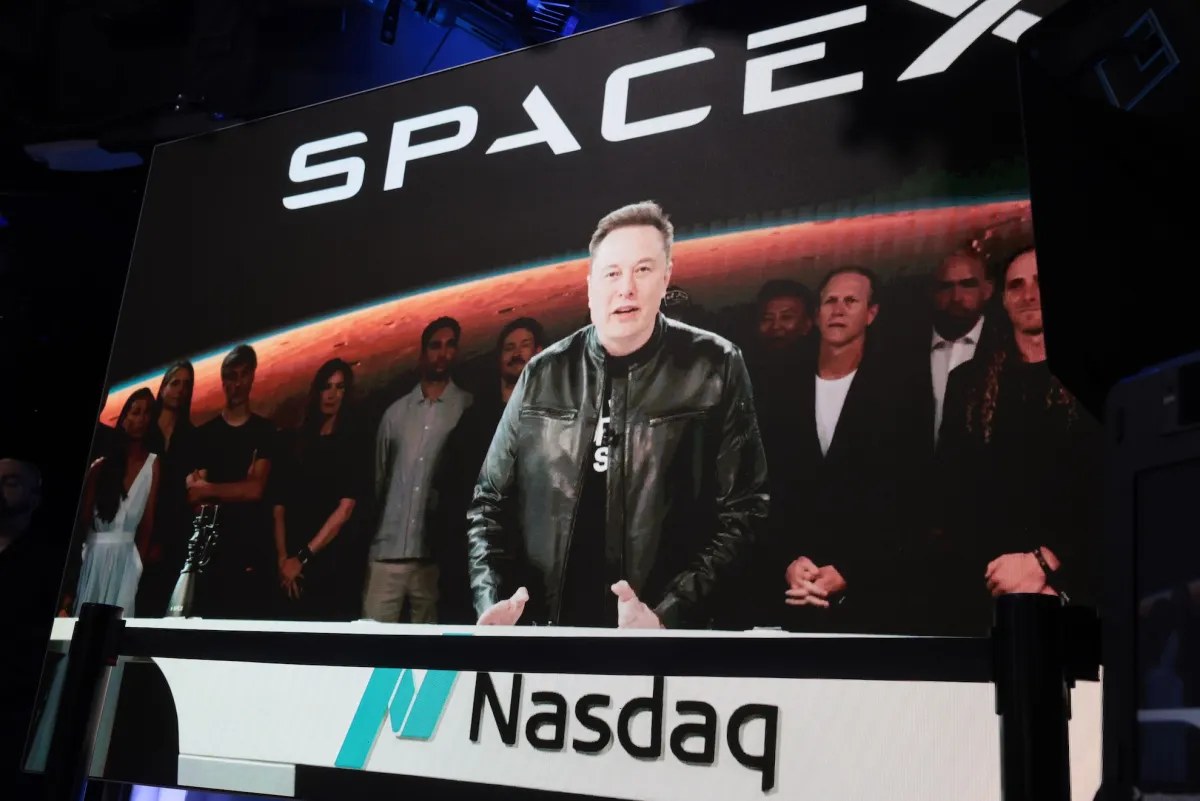
SpaceX's $75 billion IPO made Musk the world's first trillionaire on June 15; two outlets covered it and reached opposite verdicts on what the number means.
2 of 10 sides covered this
Not covered by Democratic Socialist, Liberal Mainstream, Center, Social Conservative, Libertarian, MAGA, Evangelical, Identity
Two lenses covered the same event and shared almost no premises.
How each side framed it — tap any headline for the read
Far Left
 “Elon Musk is now a trillionaire. How much is a trillion really?”
Liberation News
“Elon Musk is now a trillionaire. How much is a trillion really?”
Liberation News
“one of the most repugnant, gross, and pathetic contemporary figures in the eyes of everyday working people.”
[13]
"Claiming that capitalism represents a free and democratic society, while allowing Musk to hoard more wealth than the poorest 46% of the world's population, is simply a joke with no punchline." Liberation News uses the IPO as a vehicle for a structural critique: the accumulation of a trillion dollars is not wealth creation but extraction, representing labor that workers across the globe produced and are now denied. The piece contextualizes the number through comparators (median US household has $8,000; to reach $1 trillion at $1/second takes 31,710 years) designed to make the figure viscerally legible to working-class readers. Musk is described as "one of the most repugnant, gross, and pathetic contemporary figures in the eyes of everyday working people."
Read the original ›
Tech
 “SpaceX is public: Everything you need to know post-IPO”
TechCrunch
“SpaceX is public: Everything you need to know post-IPO”
TechCrunch
“Turning Musk into the world's first trillionaire.”
[555]
"Turning Musk into the world's first trillionaire." TechCrunch's framing is a comprehensive investor/industry briefing: IPO mechanics, share price, post-IPO acquisitions (Cursor at $60B), valuation trajectory, and what the public company status means for SpaceX's satellite business and government contracts. No moral or political framing appears. The milestone is treated as a market event with business implications, not a social or political one.
The two framings address different questions entirely. Liberation News asks whether the fact should exist at all. TechCrunch asks what it means for investors and competitors.
Read the original ›
The facts — what the record establishes
SpaceX priced 555.6 million shares at $135 each, raising $75 billion in what TechCrunch describes as "the largest IPO in history." [555] The total raised figure rose to $85.7 billion. [555] SpaceX's post-IPO stock climbed 20% on June 15, pushing its valuation past Amazon to $2.7 trillion. [555] In the days following the IPO, SpaceX announced an acquisition of Cursor for $60 billion in stock. [555] The IPO pushed Musk's net worth past $1 trillion, making him what TechCrunch calls "the world's first trillionaire." [555] Liberation News states that $1 trillion is "enough to rebuild the entire Gaza Strip after Israel's genocidal destruction of it 14 times" and is "greater than the gross domestic product of the world's 92 poorest countries combined." [13]
The takeaway
The Communist left decided the IPO was a class event: evidence of structural wealth extraction at civilization scale. The tech press decided it was a market event: the mechanics of the largest IPO in history and its implications for the industry. Every other lens ignored it. SpaceX holds dominant US government contracts and Musk recently ran a federal cost-cutting operation; no coverage examined whether his trillion-dollar personal wealth changes the oversight calculus for those relationships.
---
UFC White House Terror Plot
A 19-year-old whose mother called police became the face of an accelerationist plot; how the FBI handled disclosure became almost as contentious as the plot itself.
2 of 10 sides covered this
Not covered by Communist, Democratic Socialist, Center, Social Conservative, Libertarian, Evangelical, Identity, Tech
The two lenses that covered this story centered different aspects: liberal mainstream focused on the radicalization pathway and the FBI's disclosure controversy; MAGA focused on the scale of the threat and the need for maximum punishment.
How each side framed it — tap any headline for the read
Liberal
 “19-year-old would-be attacker of UFC event sought to use drones and was referred to police by his parents, FBI says”
CNN
“19-year-old would-be attacker of UFC event sought to use drones and was referred to police by his parents, FBI says”
CNN
“Focused on some form of accelerationism.”
[79]
"Focused on some form of accelerationism." CNN's framing centers the radicalization pathway: a teenager's parents, observing warning signs, reported him to authorities. The piece presents the case primarily as a law enforcement and early-intervention story, with the "accelerationism" ideology identified and explained. The FBI's rapid public disclosure is not the story CNN leads.
Read the original ›
Liberal
“Trump FBI IMPLICATED in ASSASSIN MAJOR RED FLAGS !!!”
MeidasTouch
“The Secret Service says, 'We were still investigating a lot of this... and now you may have just compromised the investigation.'”
[143]
"The Secret Service says, 'We were still investigating a lot of this... and now you may have just compromised the investigation.'" MeidasTouch (98,365 views) centers the inter-agency conflict: Cash Patel's FBI released press statements and made social media posts about a still-active investigation, which the Secret Service says endangered ongoing work. MeidasTouch frames this as evidence that the FBI under Patel is operating as a political communications tool, with the disclosure serving Trump's publicity interests during his birthday event at the cost of investigative integrity.
Read the original ›
MAGA
“NEW Details TERRIFYING in PLOT to MASSACRE TRUMP'S UFC WHITE HOUSE CROWD”
The Officer Tatum
“The plot and plan of attempted murder on 80,000 people.”
[389]
"The plot and plan of attempted murder on 80,000 people." The Officer Tatum (62,371 views) leads with maximum threat severity, featuring screen captures of aerial surveillance images and map data from court dockets. The framing is punitive: anyone involved should receive "80,000 counts of attempted murder" and "go to prison for the rest of their life and die there in shame." No mention of the radicalization pathway, the disclosure controversy, or the role of the defendant's mother in contacting police.
Read the original ›
The facts — what the record establishes
Federal officials charged five people in connection with an alleged plot to attack the UFC fight night event at the White House on June 15, Trump's 80th birthday. [79] Tycen Proper, 19, is one of the defendants; his mother called local police on June 10 after observing him buying guns, communicating with a group of radicals online, and researching locations near the White House for what the group called "recon" and "hit and run missions." [79] Court documents describe the group's ideology as "some form of accelerationism," which holds that societal collapse should be expedited. [79] The alleged plan included drones and a gunman; crowd estimates for the event were approximately 80,000. [389] The Secret Service was reportedly "livid" that FBI Director Cash Patel publicized information about the investigation via social media while the Secret Service was still attempting to locate some individuals believed to be involved. [143]
The takeaway
Liberal mainstream decided the story was about radicalization pathways (the mother who called police) and institutional accountability (Patel's disclosure). MAGA decided it was about the severity of the threat to Trump and the crowd. The category split: "who created the conditions for this" (radicalization, platform responsibility) vs. "how severe was this and what punishment does it warrant." The shared blind spot: no coverage examined the accelerationist networks specifically, what communities the group was embedded in, or whether the case reflects a pattern rather than a one-off.
---
AI "New Social Norms", Jensen Huang vs. the Critics
Jensen Huang and David Friedberg both said AI creates no net job losses the same day Gary Marcus reported OpenAI's competitive moat has collapsed; the two claims coexist without resolving.
3 of 10 sides covered this
Not covered by Communist, Democratic Socialist, Liberal Mainstream, Social Conservative, MAGA, Evangelical, Identity
The AI debate today falls cleanly on the internal Tech / AI axis: optimists reading AI as productivity abundance, skeptics reading the same facts as unsustainable hype. The AP provides the neutral factual record; Reason provides the fiscal-conservative constraint.
How each side framed it — tap any headline for the read
Center
 “AP Exclusive: Nvidia's Jensen Huang says society needs 'new social norms' in the age of AI”
Associated Press
“AP Exclusive: Nvidia's Jensen Huang says society needs 'new social norms' in the age of AI”
Associated Press
“We need to create new social norms.”
[157]
"We need to create new social norms." The AP frames this as a CEO-public-opinion management story: Huang is responding to rising public concern about AI's harms by making a normative argument. The piece treats Huang as both an interested party (he runs a chip company developing AI systems) and a credible voice on societal adaptation. It does not adjudicate whether his optimism is warranted.
Read the original ›
Tech
“David Friedberg: The AI Jobs Panic Is a Crock of Sh*t”
All-In Podcast
“There is no job loss with AI. I will say it again.”
[595]
"There is no job loss with AI. I will say it again." Friedberg (11,393 views) makes the strongest version of the optimist case from concrete business experience: AI's primary deployment in real companies is on the revenue side (enabling more products) rather than the cost side (replacing headcount). He treats the job-loss panic as a category error, framing AI-driven productivity as analogous to historical productivity gains that expanded rather than contracted employment.
Read the original ›
Tech
 “OpenAI's lead is dwindling fast”
Marcus on AI
“OpenAI's lead is dwindling fast”
Marcus on AI
“It's the lack of a moat, stupid.”
[541]
"It's the lack of a moat, stupid." Gary Marcus reads OpenAI's deteriorating competitive position as confirmation of his longstanding prediction: when everyone builds the same technology, no single firm can maintain dominance, and the current investment levels cannot be justified by revenue. His frame is that the AI hype cycle is visibly deflating even as the technology continues to develop.
Read the original ›
Lib
 “Even an AI-Sparked Economic Miracle Will Not Save the Federal Budget”
Reason.com
“Even an AI-Sparked Economic Miracle Will Not Save the Federal Budget”
Reason.com
“Congress cannot sit by and hope for AI to fix the deficit.”
[266]
"Congress cannot sit by and hope for AI to fix the deficit." Reason makes the fiscal conservative argument that AI optimism has become a substitute for structural budget discipline in Washington: "In the words of Elon Musk, AI and robotics are 'the only thing that can solve for the debt situation.'" Reason argues this is wishful thinking regardless of whether AI delivers productivity gains, because the scale of entitlement spending growth outpaces any plausible productivity dividend.
Read the original ›
The facts — what the record establishes
Nvidia CEO Jensen Huang gave an AP interview in Sherman, Texas, saying society needs "new social norms" and calling on everyone to "just go engage" with AI. [157] He framed AI as likely to create faster economic growth and more scientific breakthroughs while acknowledging public concern about job losses and existential threats. [157] David Friedberg, speaking on the All-In Podcast (11,393 views), argued: "There is no job loss with AI. I will say it again. I've said it a thousand times." [595] Friedberg's argument is that AI enables companies to expand revenue through productivity gains rather than primarily cutting headcount. [595] Gary Marcus (Marcus on AI) reported that OpenAI's market share lead is "dwindling fast," citing Microsoft's decision to distance itself from OpenAI and Ed Zitron's reporting that OpenAI is "burning money even faster than people thought," with losses multiplying approximately 8x per year. [541] Reason argues that even a full AI-driven economic miracle would not close the federal deficit without structural spending reform. [266]
The takeaway
The Tech / AI lens divided cleanly along the optimist-vs-skeptic axis, with Friedberg and Huang on one side (productivity abundance, no net job loss), Marcus on the other (unsustainable investment, moat collapse). Reason provided the fiscal-conservative reframe: the question is not whether AI creates economic gains but whether those gains can substitute for political decisions Congress refuses to make. The collective blind spot: neither optimists nor skeptics addressed the labor market effects on specific categories of workers (call center workers, junior programmers, content creators) with any empirical specificity. The debate stayed abstract while the AP's Huang interview provided the only concrete data point.
---
UK Social Media Ban for Children Under 16
The teenagers most affected by the UK ban were interviewed for their reaction; they said they missed being able to text their friends, which suggests the policy designers did not ask them.
2 of 10 sides covered this
Not covered by Communist, Liberal Mainstream, Social Conservative, Libertarian, MAGA, Evangelical, Identity, Tech
Only two lenses covered the UK ban, from opposite angles: one centered the teenagers' own voices against the policy; the other centered a libertarian institutional critique of government age mandates.
How each side framed it — tap any headline for the read
Dem Soc
“WHY ARE THEY DOING THIS”
HasanAbi
“Despite what the government says, these teenagers don't seem to want it.”
[54]
"Despite what the government says, these teenagers don't seem to want it." HasanAbi (10,216 views) covers the ban through the user experience of the people it affects: teenagers who report that the ban would prevent them from texting friends and watching content they grew up with. The video centers the gap between policymakers' stated intent and the teenagers' reported needs as the primary analytical question, taking no clear position on the ban itself.
Read the original ›
Center
 “Do social media bans actually protect kids? | The Excerpt”
USA Today
“Do social media bans actually protect kids? | The Excerpt”
USA Today
[198]
USA Today's podcast invites the Cato Institute's David Inserra to address whether government bans are the right intervention, focusing on age verification as a separate policy lever, free speech concerns, and parental alternatives. The framing positions the debate between government mandates and individual/parental responsibility without taking a side.
Read the original ›
The facts — what the record establishes
The UK government announced a ban on social media access for all children under 16, going beyond Australia's existing under-16 ban. [54] The ban covers Snapchat, TikTok, YouTube, and Instagram, and extends to gaming services and live streaming platforms. [54] Romantic AI chatbots are banned for anyone under 18. [54] Popular chatbots like ChatGPT and Meta AI are not blocked but will be prevented from engaging in sexual content with young people. [54] In interviews, affected teenagers said they would miss Snapchat for texting friends and YouTube for childhood memories. [54] The Cato Institute's David Inserra appeared on USA Today's podcast to discuss the policy, focusing on age verification requirements and free speech implications. [198]
The takeaway
The two lenses that covered the UK ban approached it from the left (centering who the ban affects) and the center (centering whether the mechanism works). The liberal mainstream, MAGA, and social conservative presses, which might be expected to have strong views on children's online safety and platform regulation, did not cover the UK announcement at all in today's articles. Tech / AI coverage, which covers platform policy extensively, also did not engage. The ban represents the furthest-reaching government internet regulation of children in the Western world, but arrived on a day when the Iran deal and primary results dominated every other lens's attention.
---
Israel, the West Bank, and the Identity Split
The Forward centers a new political coalition trying to change Israel's trajectory from within; Mondoweiss centers an Israeli military action that proves that trajectory is already locked in.
Within Identitythe internal split · 2 standpoints
The Forward and Mondoweiss covered different facts from the same region on the same day, and the two stories point in opposite directions: one toward political possibility, the other toward foreclosed political space.
The standpoints — tap any headline for the read
Jewish American
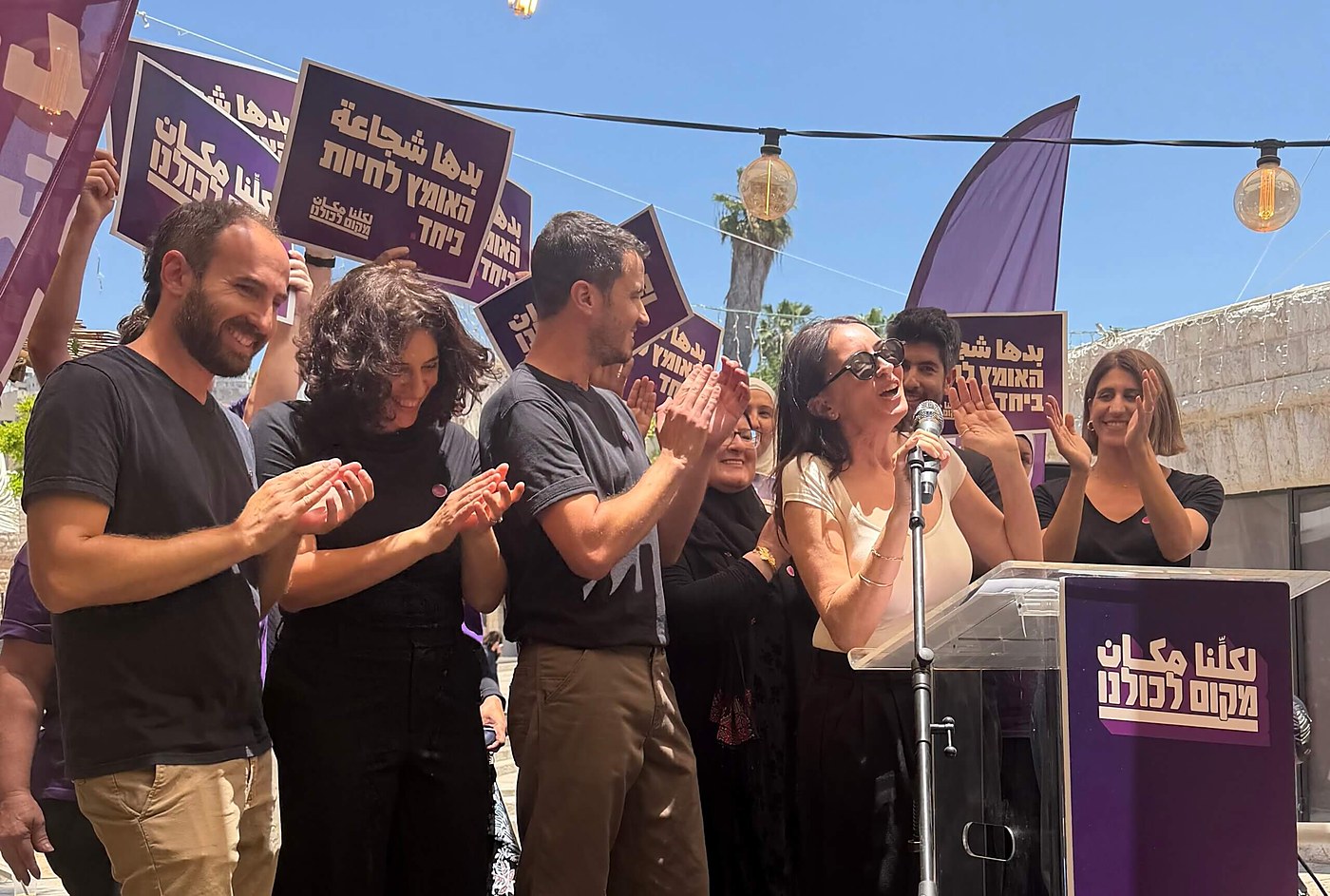
 “New Jewish-Arab political party debuts in Israel, aiming to topple Netanyahu”
The Forward
“New Jewish-Arab political party debuts in Israel, aiming to topple Netanyahu”
The Forward
“Aiming to topple Netanyahu.”
[500]
"Aiming to topple Netanyahu." The Forward covers the debut of Makom Lekulanu as a politically significant development: a coexistence-oriented Jewish-Arab party entering Israel's crowded electoral field, with leaders who survived October 7 from both communities. The framing centers agency and coalition: what this movement might build. The Forward's coverage reads the party's debut as a hopeful counterpoint to Netanyahu's coalition.
Read the original ›
Palestinian-Arab
 “In rare move, Israel seizes homes inside Palestinian Authority-controlled part of the West Bank, raising alarms over annexation”
Mondoweiss
“In rare move, Israel seizes homes inside Palestinian Authority-controlled part of the West Bank, raising alarms over annexation”
Mondoweiss
“The Oslo Accords are truly dead.”
[490]
"The Oslo Accords are truly dead." Mondoweiss centers the military seizure of Area A property as the definitive story: the last legal framework protecting Palestinian land in the West Bank has been breached. The piece frames the seizure not as an exceptional event but as the culmination of a trend, naming it as evidence that Israel's annexation of the West Bank is already functionally underway regardless of formal status.
The two stories cover opposite sides of the same political reality, each appearing only in the community most invested in that frame. The Forward leads on electoral possibility; Mondoweiss leads on territorial facts. Both claims hold simultaneously; the difference is which question each outlet asks first.
Read the original ›
The facts — what the record establishes
A new Jewish-Arab political party, Makom Lekulanu ("A Place for Us All"), debuted in Israel on June 17, led by Rula Daood and Alon-Lee Green of the coexistence group Standing Together. [500] The party's leadership includes a Palestinian peace activist, a Tel Aviv-Jaffa city council member, and Yonatan Zeigen, whose mother Vivian Silver was killed by Hamas on October 7, 2023. [500] Israel's next election is scheduled for October. [500] Separately, the Israeli military seized the home of Muhammad Hussein Rahal in Jenin, in Area A of the West Bank, to build a military base. [490] Area A is the portion of the West Bank under full Palestinian Authority control under the Oslo Accords. [490] Mondoweiss describes this as "the first time since the signing of the Oslo Accords in 1993 that Israel has seized land in Area A for military purposes." [490] Palestinians quoted in the piece say the move "proves the Oslo Accords are truly dead." [490]
The takeaway
This is a within-lens cluster: both articles come from the Identity lens, but from internally opposed community standpoints. The Forward (Jewish American, centrist-to-liberal) reads Israel through the axis of electoral possibility and internal coalition building. Mondoweiss (Palestinian-Arab, progressive) reads it through the axis of territorial facts on the ground. The internal axis is "transformation from within" vs. "transformation is no longer possible from within." No other lens covered either story, which means the Israeli-Palestinian situation today was processed entirely within the communities most directly affected, with no bridge to the broader ideological conversation.
---
The Strait of Hormuz controls roughly 20% of global oil and LNG traffic; the MOU's promise to reopen it produced an immediate market response (oil near $80/barrel, Dow at new high), making energy markets the most direct financial stakeholder in whether the deal holds.
[397][233] Iranian asset unfreezing and sanctions relief are reportedly in the agreement, but the modalities remain unresolved; both US energy companies and international banks with exposure to Iranian assets have material interests in the implementation timeline.
[460]SpaceX's $2.7 trillion post-IPO valuation and its simultaneous acquisition of Cursor for $60 billion in stock represent the largest concentration of newly public capital in US history, held by a single individual who also holds significant US government defense and satellite contracts.
[555] The transition from private to public ownership creates new disclosure requirements but does not change the fundamental structure of Musk's government relationships, which no article today examined.
Rick Jackson's reported $100 million-plus personal expenditure in Georgia's governor's race illustrates the threshold at which individual wealth can directly outcompete a sitting lieutenant governor with presidential backing.
[307] If Jackson wins in November, a billionaire with no prior office will govern the country's largest presidential battleground state, with direct implications for how Georgia's election administration operates heading into 2028.
Iran's proxy networks (Hezbollah, Houthis) and missile arsenal remain intact under the MOU; the industries with the largest stake in the 60-day negotiation are defense contractors whose contracts depend on whether US military posture in the region expands or contracts, and Gulf state governments whose security architecture depends on whether Iranian proxy activity resumes after the ceasefire.
[460][233]OpenAI's reported 8x annual loss multiplication against declining market share represents a stress test for the entire AI investment thesis; Microsoft's reported distancing from OpenAI suggests even the largest institutional AI backer is hedging.
[541] The federal government's AI procurement and policy decisions in the next six months will determine whether OpenAI's market position stabilizes or collapses further, giving Washington unusual leverage over the company when its financial fragility is peaking.